




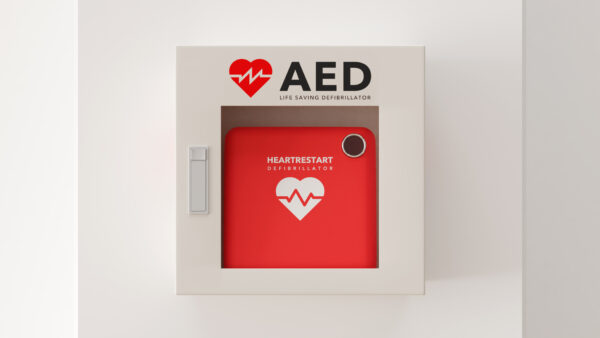
HARRISBURG – Bipartisan legislation to help ensure life-saving automated external defibrillators (AEDs) are available where Pennsylvania lineworkers perform some of their most dangerous work is headed to the governor’s desk for consideration, according to the bill’s sponsors, Sen. Camera Bartolotta (R-46) and Sen. Nick Pisciottano (D-45).
Senate Bill 1328, also known as the Utility Worksite Automated External Defibrillator Safety Act, would require electric utilities and their contractors to have AEDs readily available at worksites where lineworkers and other electrical workers perform their duties, including temporary and field locations.
“Pennsylvania’s utility lineworkers work in all weather and in inherently dangerous conditions, where sudden cardiac arrest from electrical shock on highly energized systems is a constant risk,” said Travis Beck, president, Utility Workers Union of America System Local 102. “When we brought this concern to Senator Bartolotta, she immediately went to work for lineworkers and led the effort to ensure we have access to AEDs on our worksites. UWUA System Local 102 and the PA Energy Workers Alliance greatly appreciate her bipartisan leadership and her commitment to being a champion for energy workers.”
“Lineworkers deserve real, life-saving protections on the job, and today’s vote shows what’s possible when lawmakers come together to prioritize worker safety,” said Aric Baker, president, IBEW Local 459. “IBEW Local 459 thanks Senators Bartolotta and Pisciottano for their leadership and steadfast support of energy workers.”
“I’m grateful to my colleagues for supporting this bipartisan legislation and helping advance these important protections for our energy workers,” Bartolotta said. “Our lineworkers are trained professionals who do dangerous work to keep our communities powered, and they deserve every reasonable protection we can provide. Having AEDs readily available at their worksites could make the difference between life and death.”
Sudden cardiac arrest can result from electrical shock, extreme exertion or trauma. The chance of survival decreases significantly with every minute that passes without defibrillation. AEDs are portable, simple to operate and designed to be used by individuals with minimal training.