


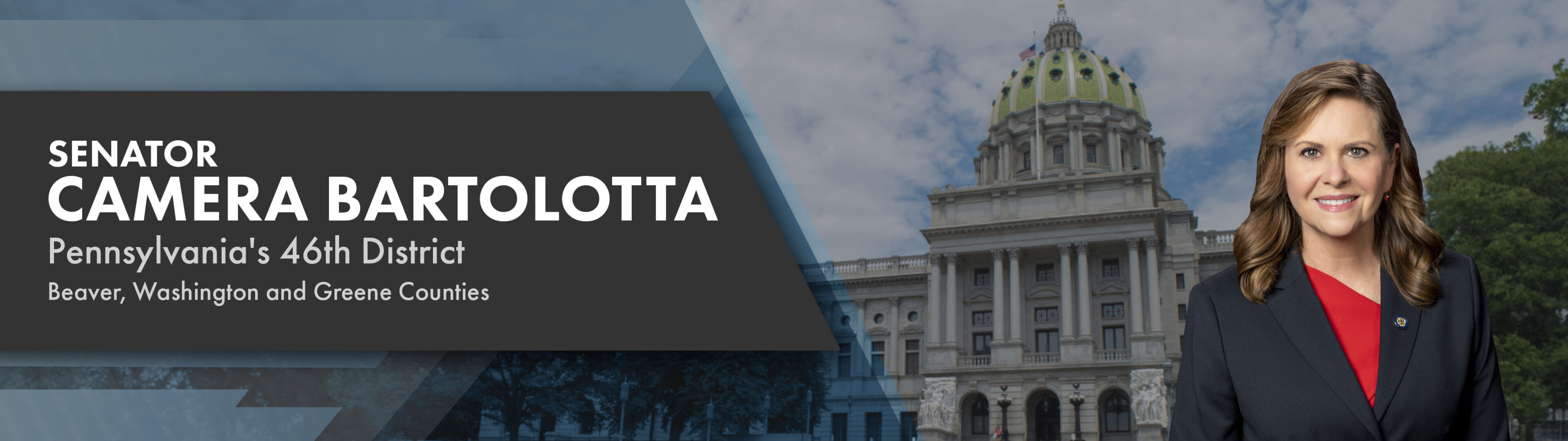


HARRISBURG – The Senate approved a 2026-27 state budget this week that does not increase taxes, avoids a mass transit bailout, safeguards the Rainy Day Fund and invests in priorities that strengthen Pennsylvania families, communities and economy, according to Sen. Camera Bartolotta (R-46).
The final $50.8 billion agreement, negotiated by Senate Republicans, cut nearly $1.1 billion from the governor’s original spending plan and reclaims $4.5 billion from prior-year budgets, special funds and other accounts, ensuring this money can be utilized to support state government programs instead of sitting idle in government accounts.
“We said ‘No’ to new taxes, kept our emergency savings safe, put unused taxpayer money back to work, and invested in infrastructure, healthcare and economic growth,” Bartolotta said. “This budget helps Pennsylvania keep moving forward and keeps us ready for future challenges.”
The budget plan also strengthens efficiency and oversight within PennDOT. It includes a one‑time investment of $775 million to accelerate local road projects. This investment will improve critical infrastructure and deliver meaningful benefits to communities throughout the 46th Senatorial District when we need it most.
The budget addresses several healthcare priorities identified by Bartolotta, including roughly $81 million in additional support for skilled nursing facilities, paired with accountability measures to ensure these resources go directly toward resident care. It also provides targeted funding to help ease the state’s nursing shortage through the Nursing Shortage Assistance Program.
Bartolotta and her colleagues rejected Gov. Josh Shapiro’s proposed energy taxes and mandates that would have favored renewable energy projects while increasing costs for consumers. Bartolotta asserts that, as energy demand increases, it is necessary to diversify energy sources rather than limit options.
The budget continues Pennsylvania’s phased reduction of the Corporate Net Income (CNI) Tax. Since 2022, the CNI tax rate has been reduced by 25%, which enhances Pennsylvania’s competitiveness and encourages businesses to invest, expand and create jobs throughout the commonwealth.
The final agreement includes a cost-of-living increase for retired teachers, school district employees and other public-sector employees who retired prior to July 2, 2001, as well as certain retired firefighters and municipal police. The COLAs are fully paid for through reallocating existing funding from grant programs, ensuring no impact to the General Fund, school districts, or municipalities.